


Nasrid Mosaic: The Perfect Geometry of Andalusian Art
Did you know that the walls of the Alhambra hide mathematical secrets that still amaze scientists and artists today? The Nasrid mosaic is not just a form of beauty — it’s a masterpiece of geometric precision that has remained harmonious for centuries.
Where Science Meets Beauty

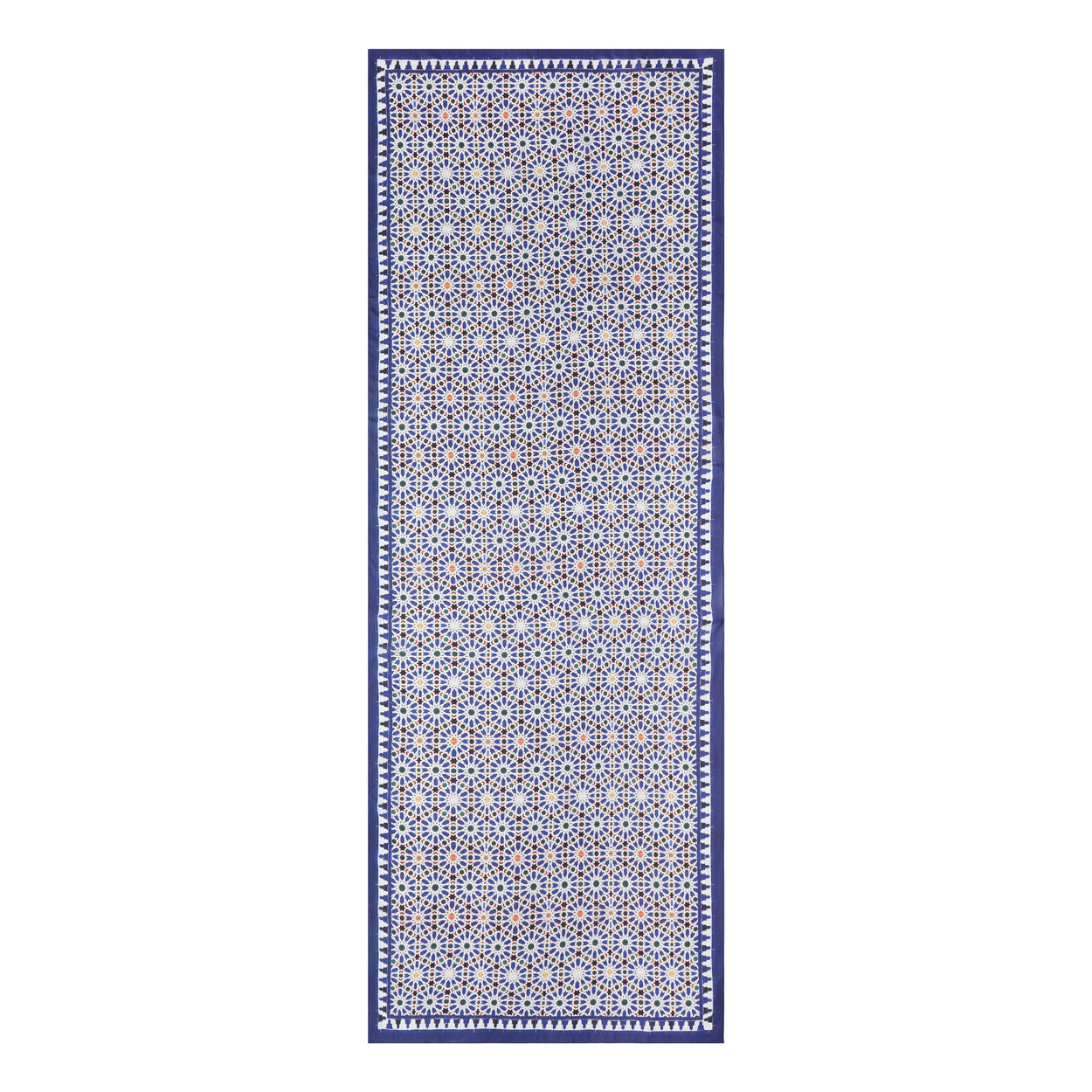
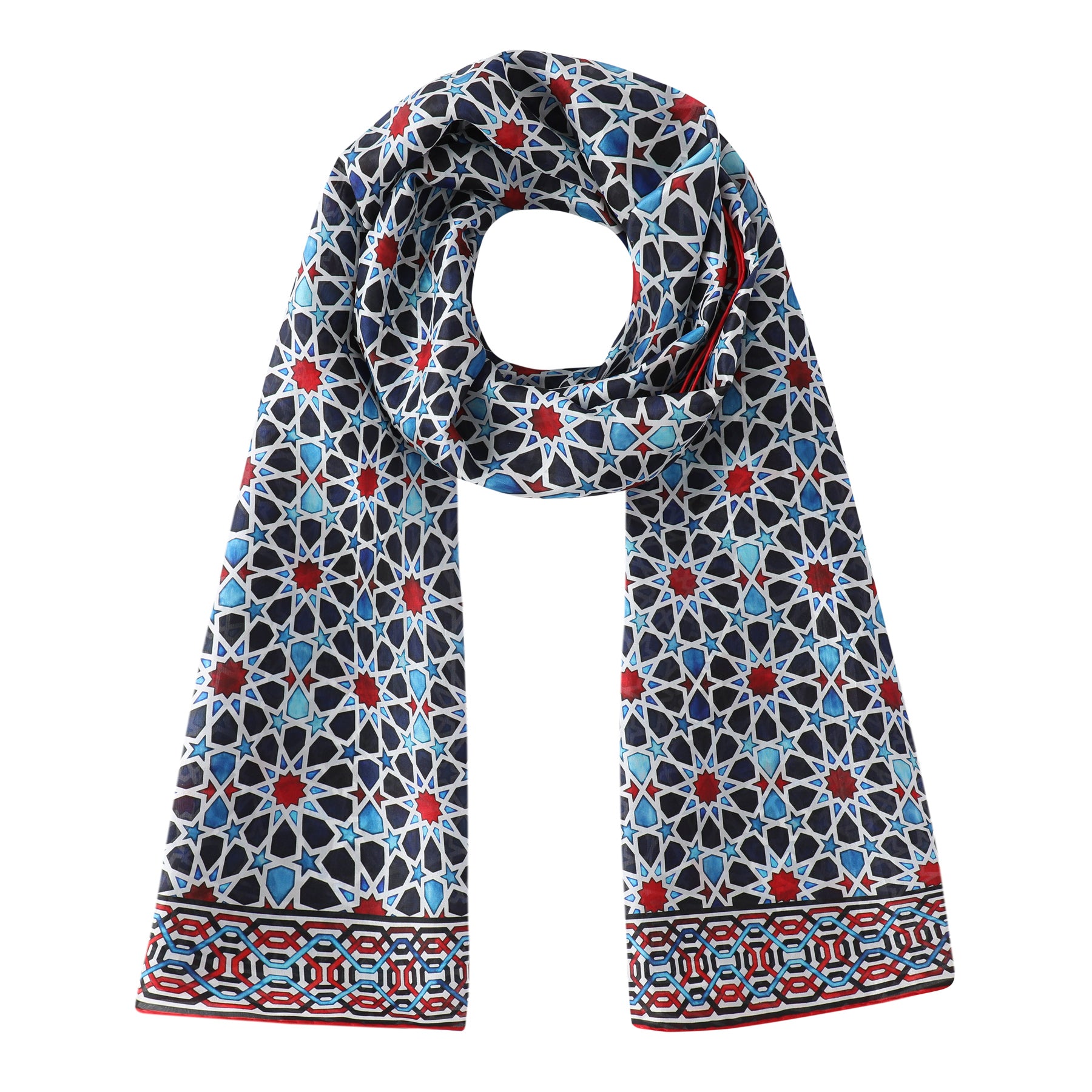
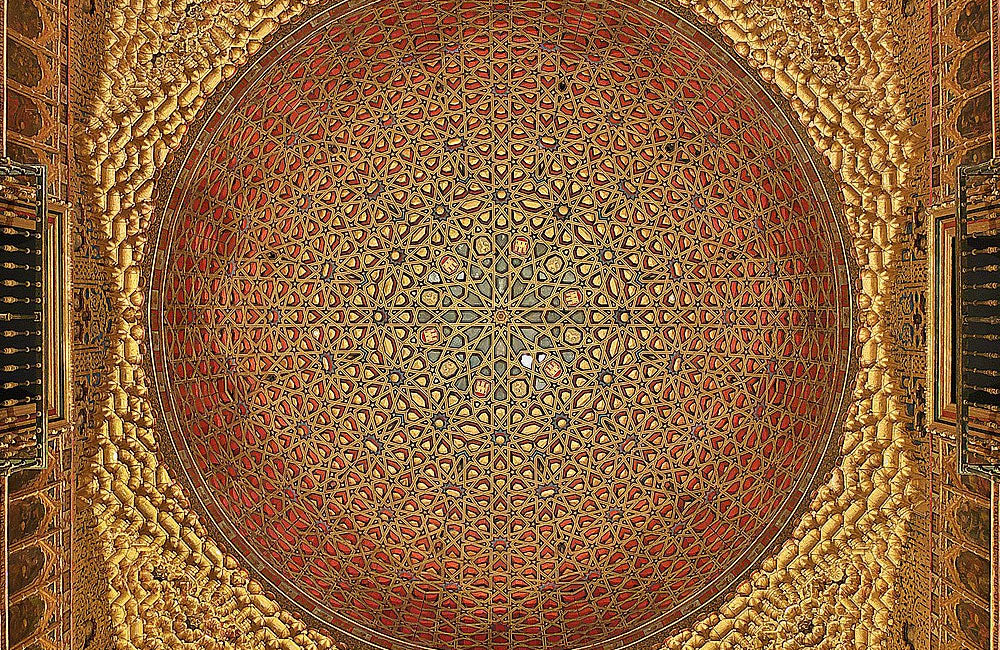
The Nasrid mosaics are made of geometric figures arranged in repeating patterns that seem endless. In them, mathematics becomes art. Circles, triangles, stars, and polygons intertwine with absolute precision — nothing is random.
This art flourished during the Nasrid Kingdom of Granada in the 14th century. Guided by the principles of Nasrid geometry, artisans sought to reflect the perfect order of the universe. Every line and every angle was a symbol of balance and unity.
Nasrid Geometry: A Universal Language

In the Nasrid mosaic, geometry speaks a language of harmony. Master craftsmen used rulers and compasses to create designs that could repeat infinitely. These forms, known as girih or interlaced patterns, symbolized infinity and divine perfection.
Many of these designs even anticipated modern mathematical discoveries, such as Escher’s impossible tessellations. But the Nasrids already knew what science would later confirm: geometry is a sacred form of art.
Colors That Speak

The Nasrid mosaics are not only about shapes but also about color. Blue, green, white, ochre, and gold combine in perfect balance. Each hue carried meaning: blue for the sky, green for life, and white for purity.
Walking through the Alhambra is like stepping into a world where mathematics stirs the soul.
A Living Legacy: From Walls to Design
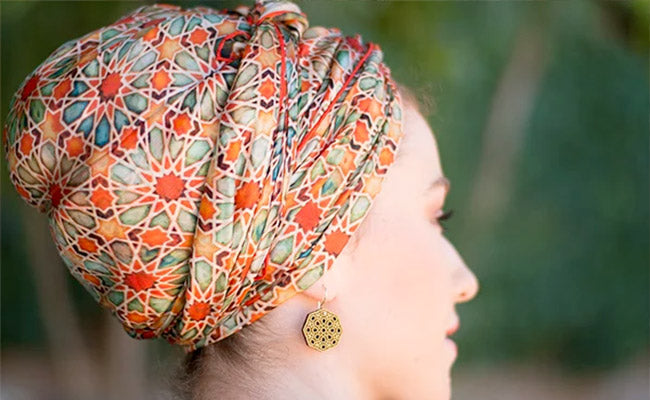
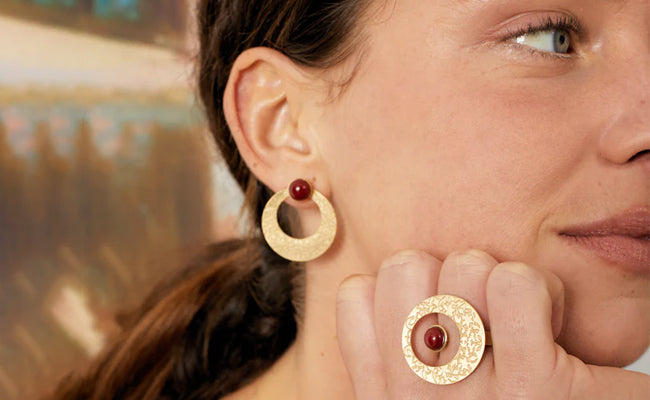
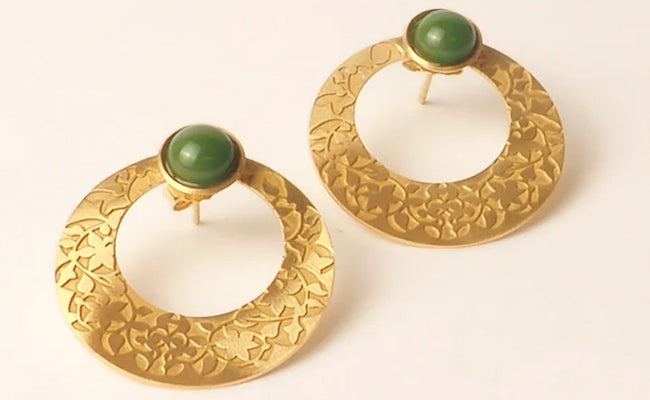
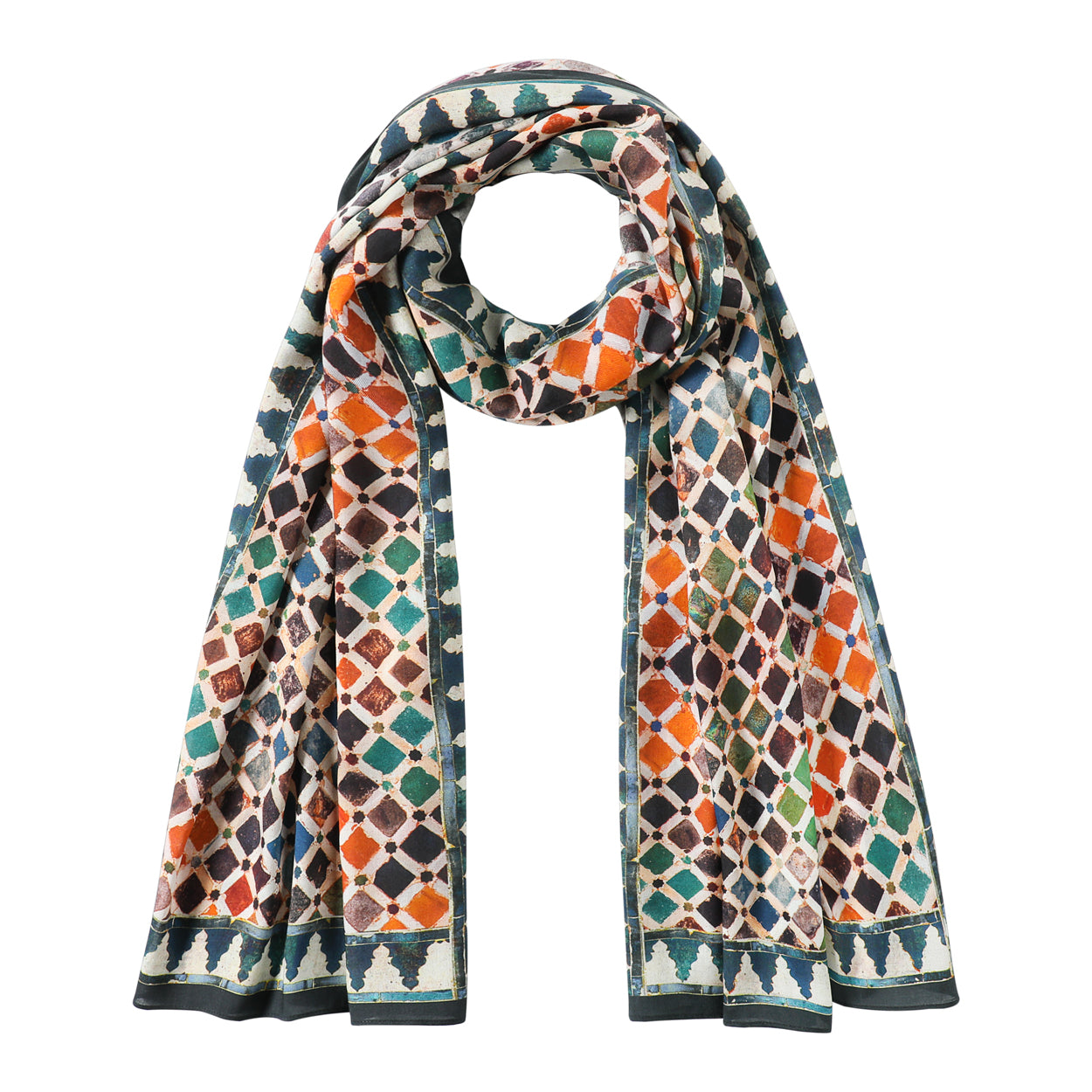
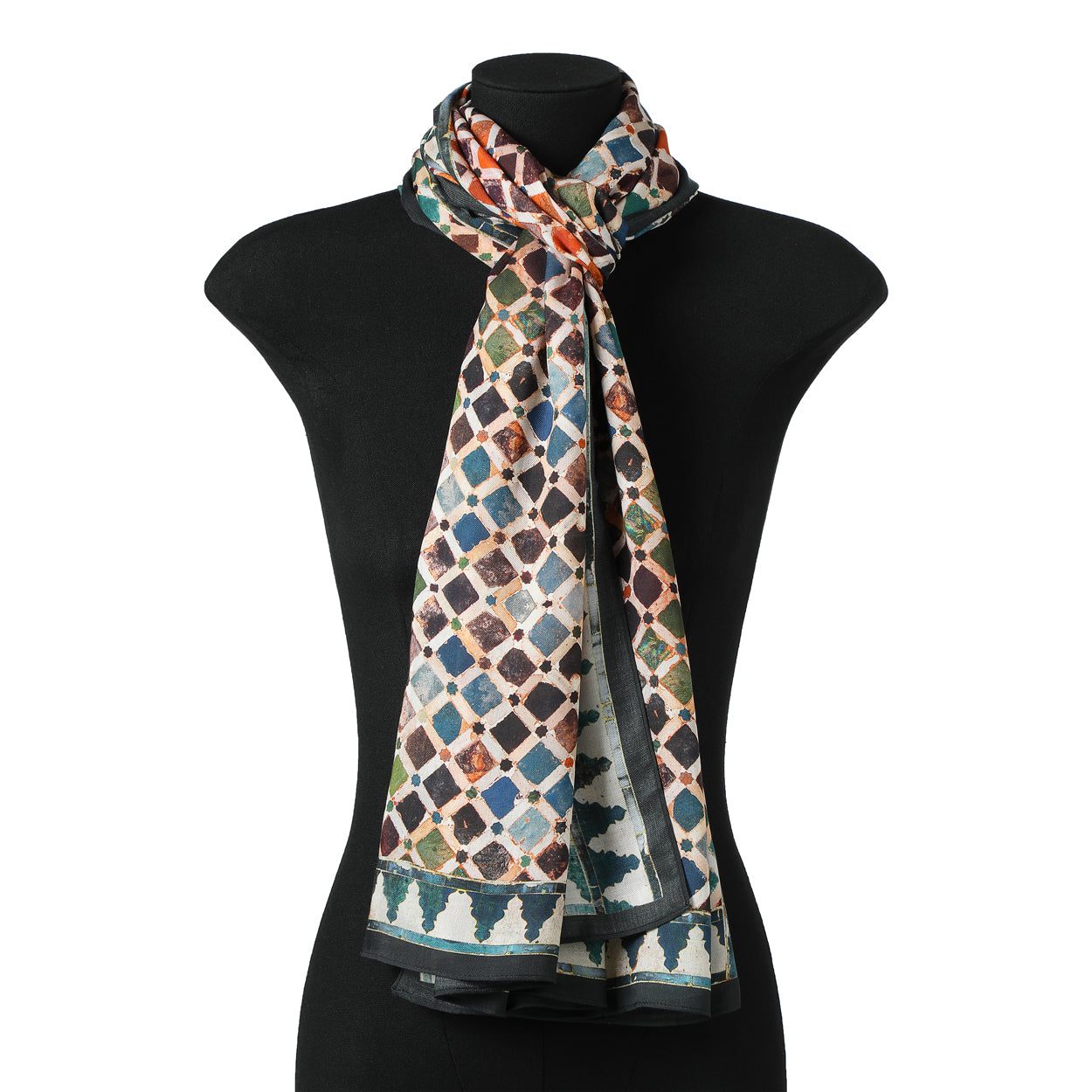
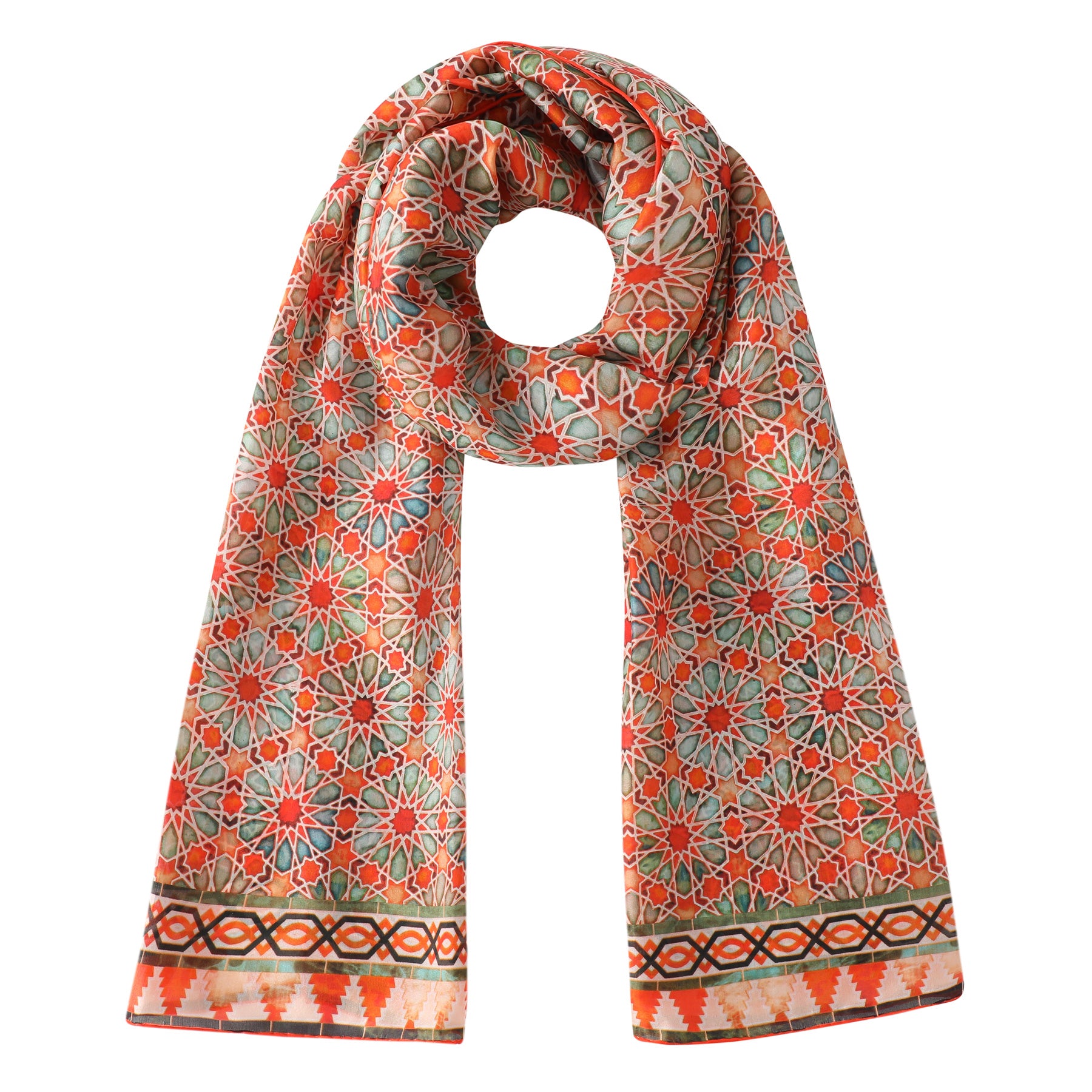
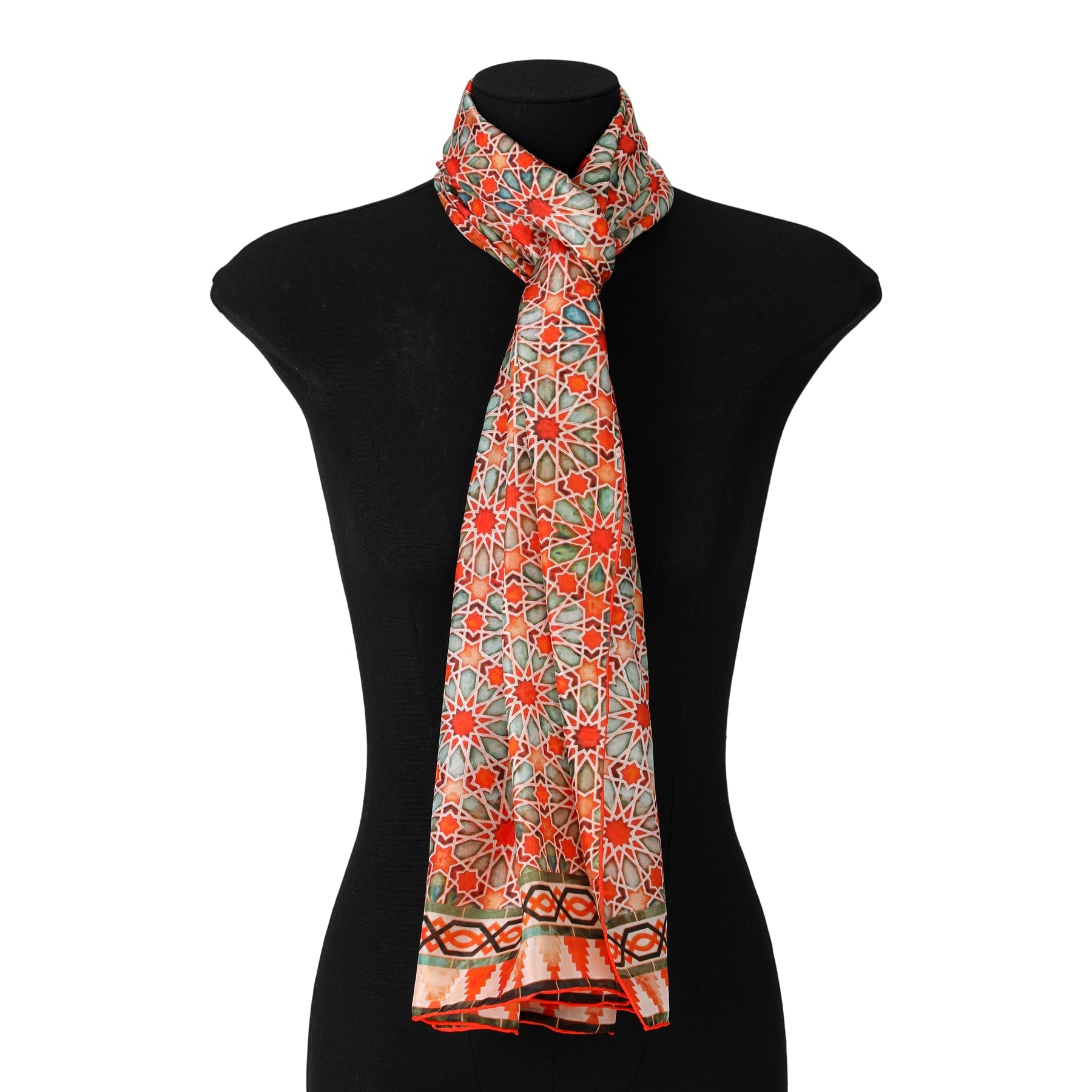
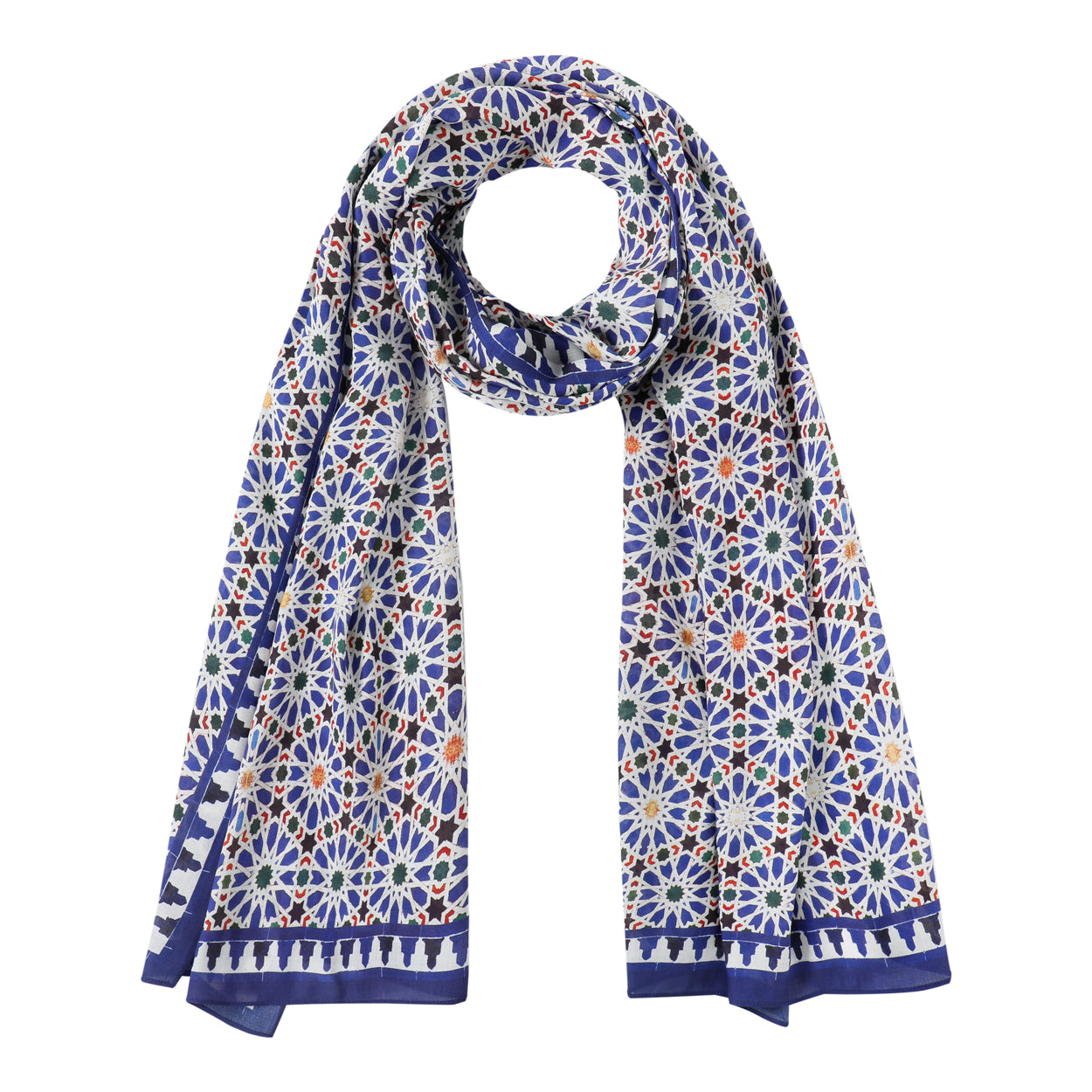
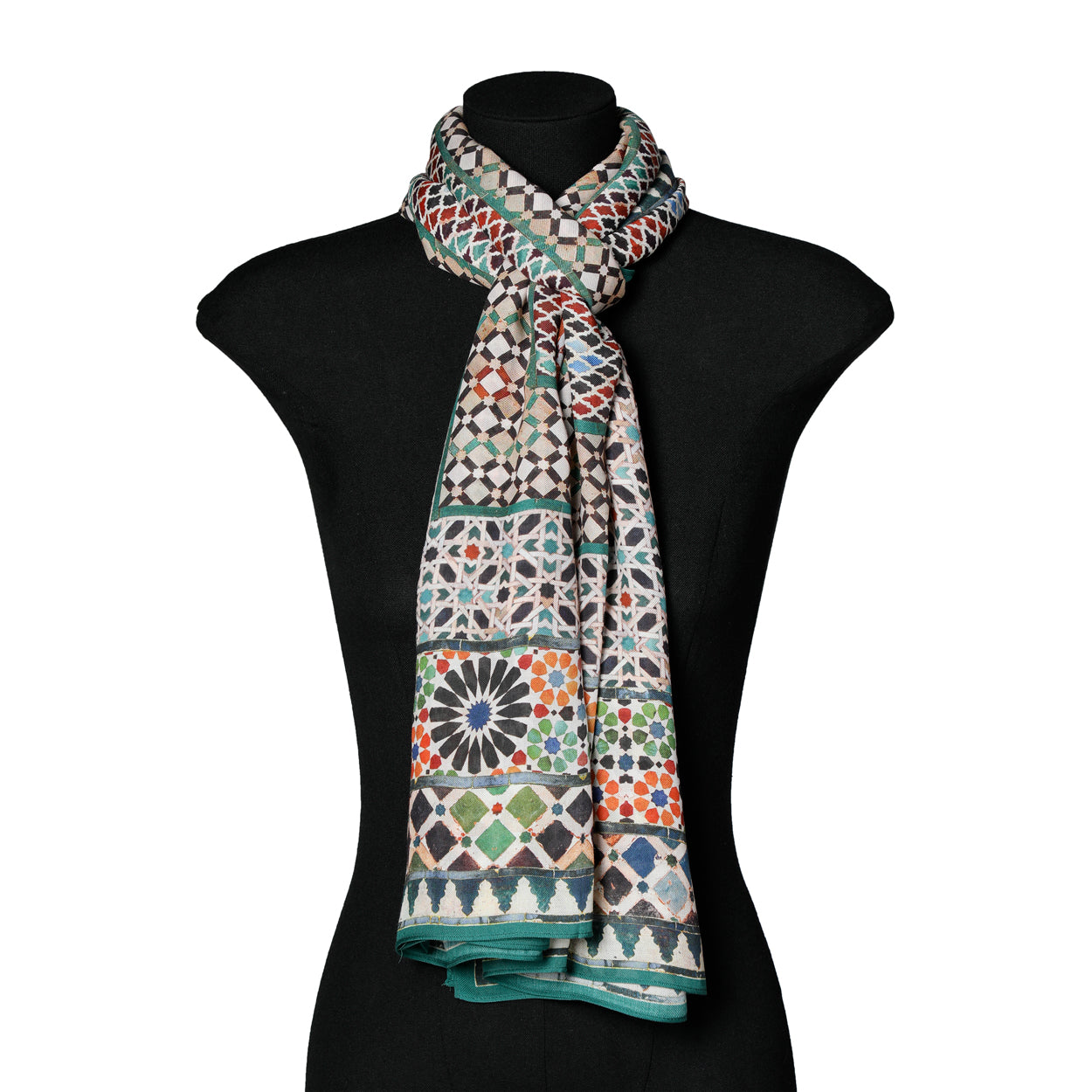
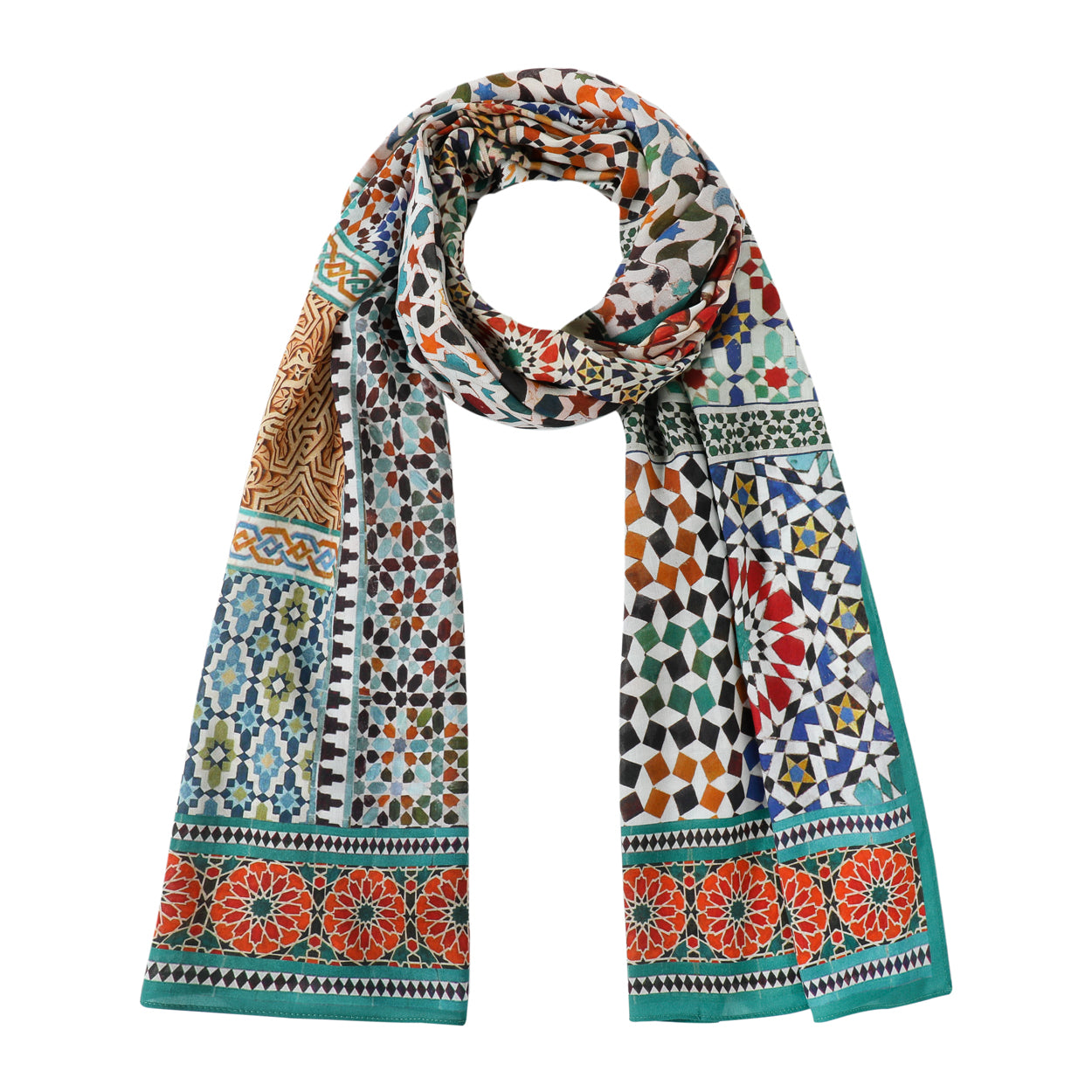
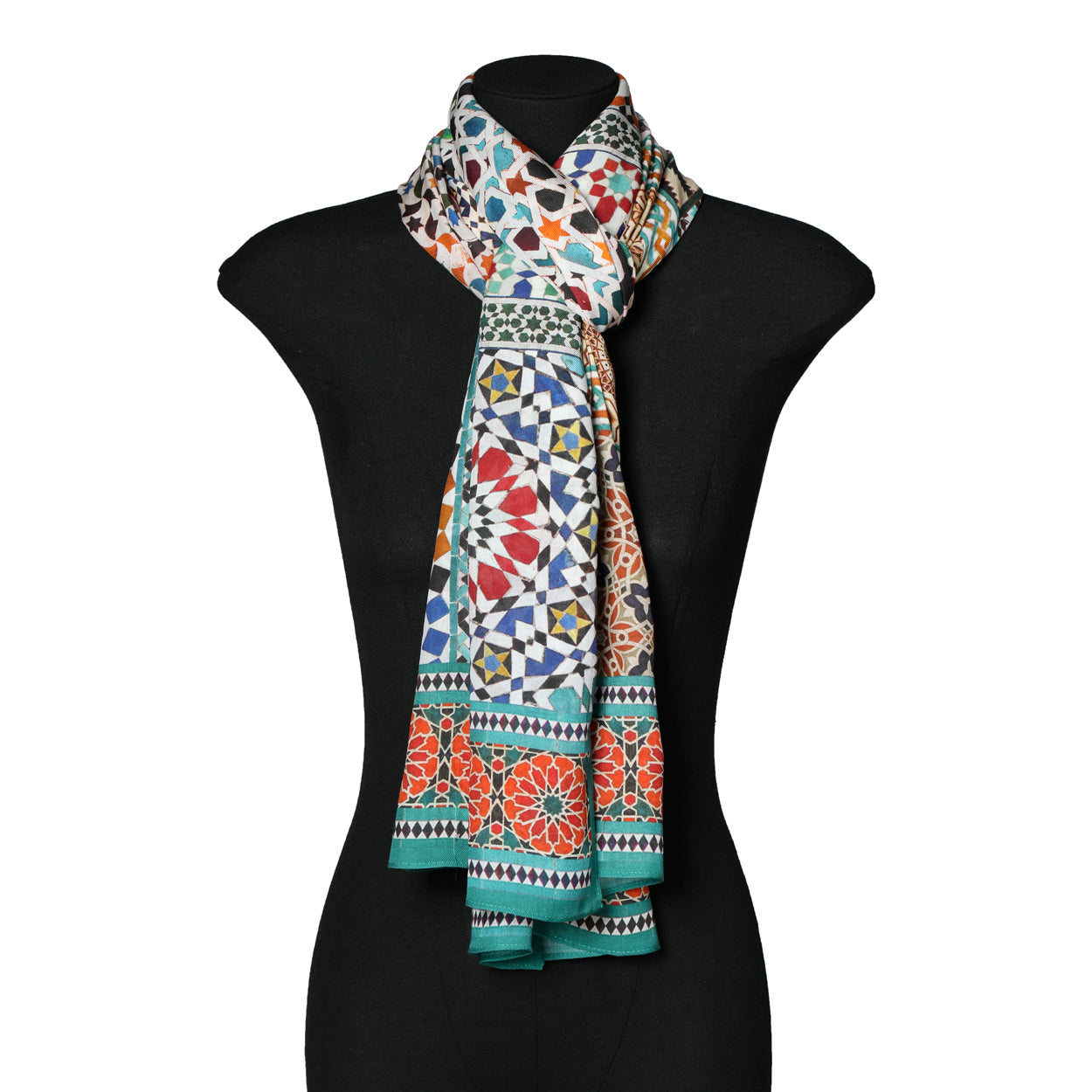
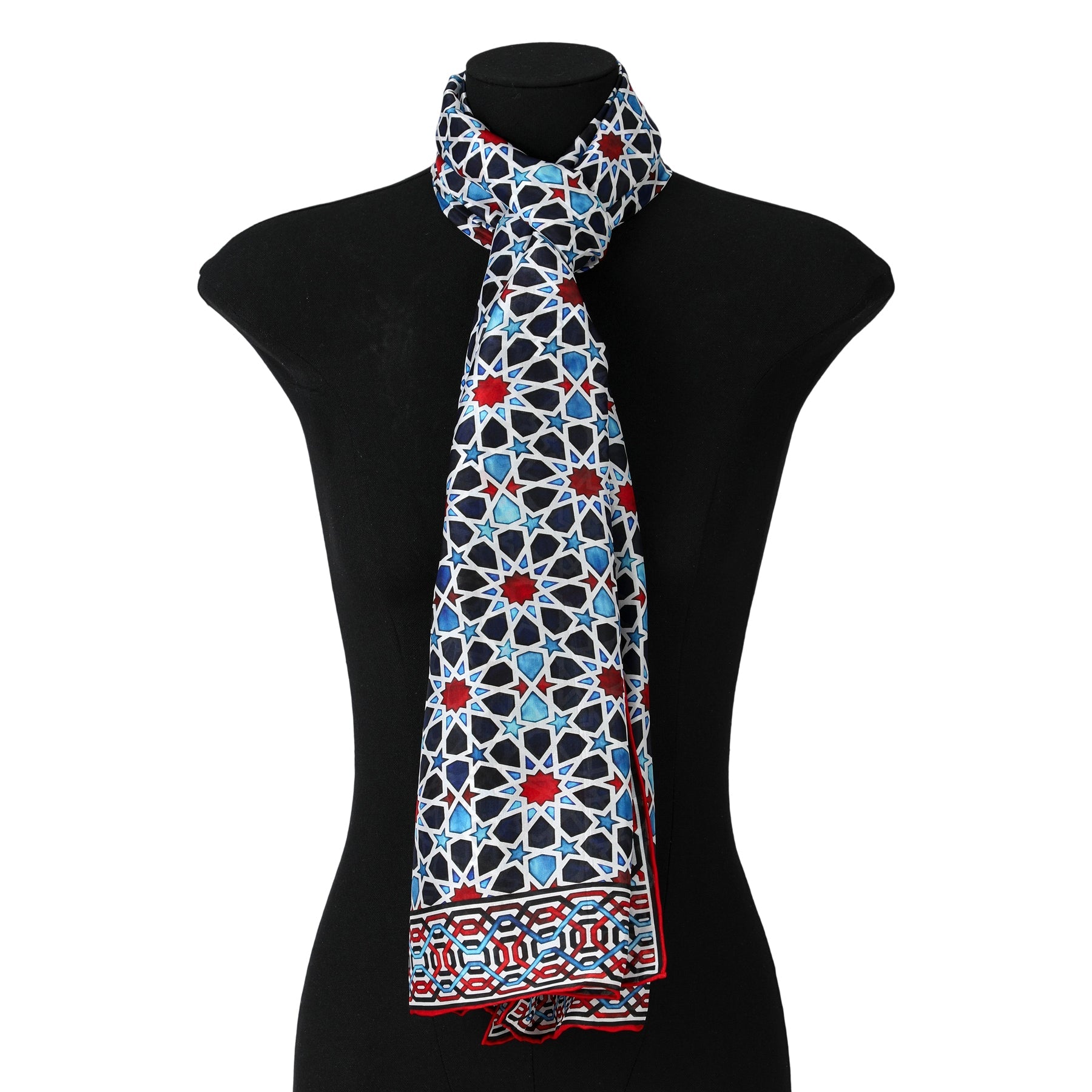
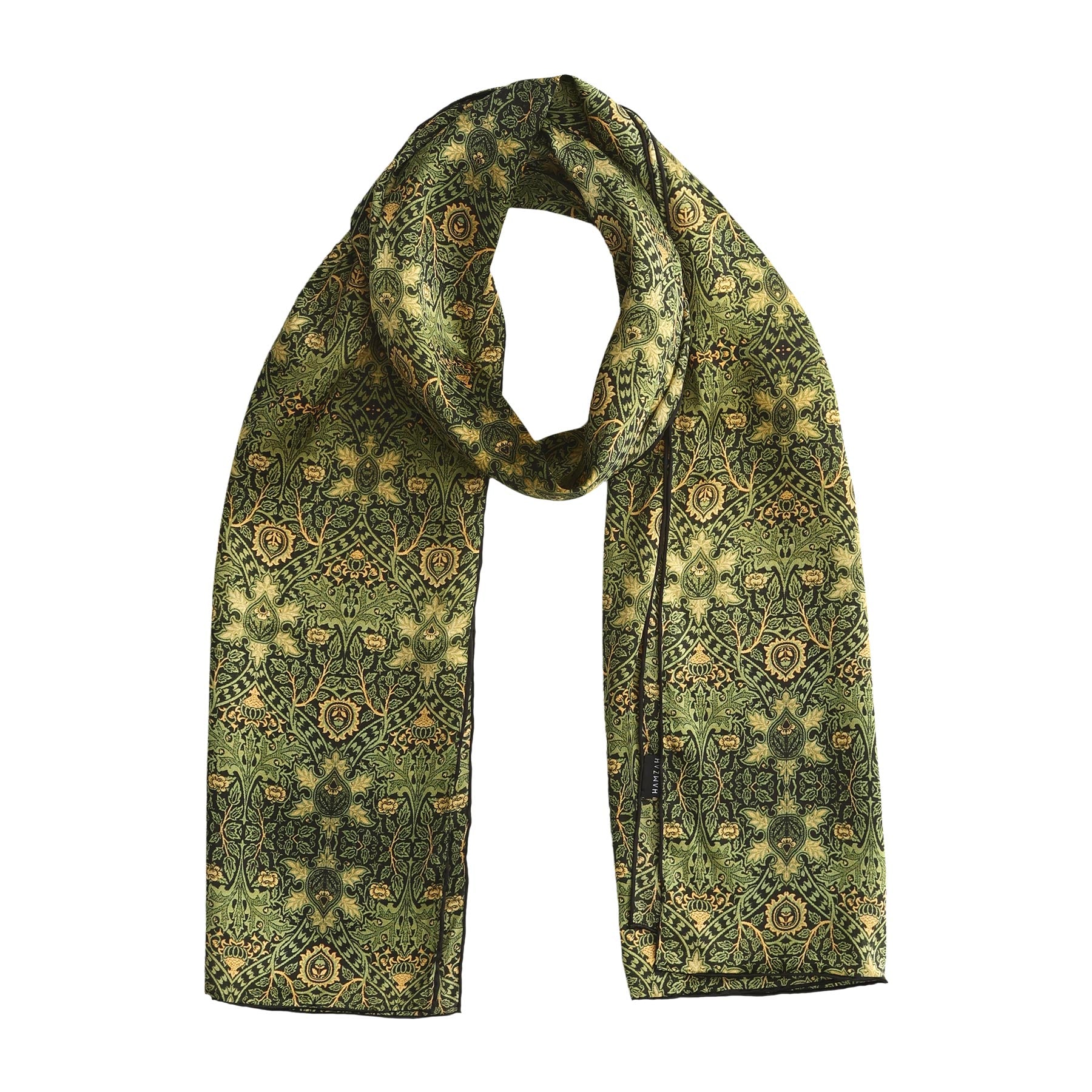
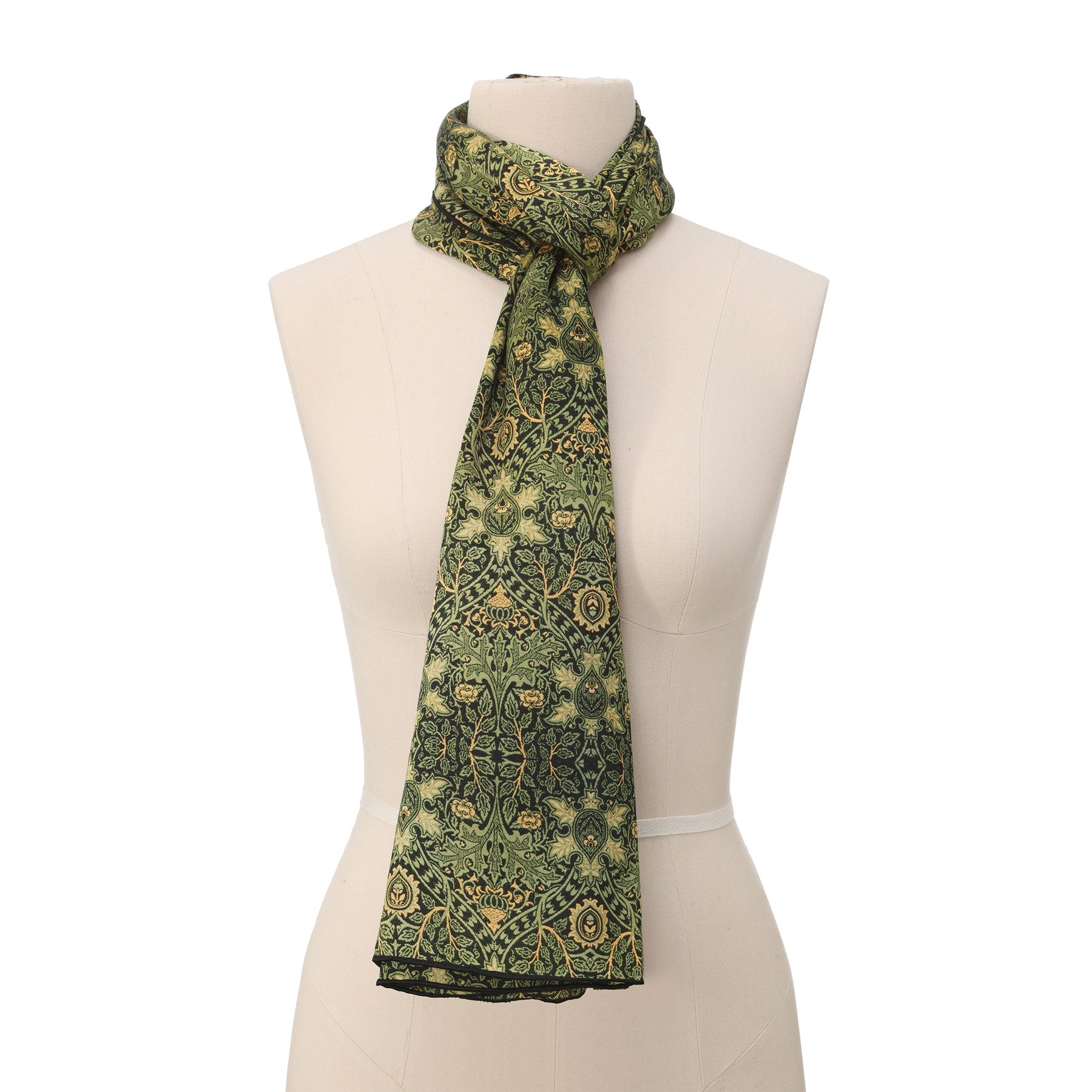
Today, the legacy of the Nasrid mosaic continues to inspire architecture, jewelry, and fashion. At Munira, we reinterpret this heritage through scarves and shawls that preserve the Andalusian geometric essence. Each piece is a way to wear art, history, and harmony.
Frequently Asked Questions
What materials were used in Nasrid mosaics?
Mainly glazed ceramics, carved plaster, and multicolored tiles made with natural minerals.
What’s the difference between a Nasrid mosaic and a Roman one?
Roman mosaics depicted people or scenes. The Nasrid mosaic avoided images, focusing instead on geometry and symmetry.
Why was geometry so important in Islamic art?
Because geometry represents divine order and perfection — a reminder that everything in the universe follows a harmonious design created by Allah.
Conclusion
The Nasrid mosaic is the perfect blend of intellect and spirit, of calculation and beauty. Each pattern reflects a spiritual vision of the world — one that sees infinity in every line. And that same harmony lives on today, transformed into art you can carry with you.




Leave a comment
This site is protected by hCaptcha and the hCaptcha Privacy Policy and Terms of Service apply.