





Islamic Geometry: Evolution of the Alhambra Mosaics
Islamic Geometry
What secrets lie within the walls of the Alhambra? Why do its mosaics continue to inspire artists, architects, and mathematicians centuries later? The answer lies in Islamic geometry — a visual language that unites art, science, and faith. Every line, every angle, and every color was created to reflect the divine order of the universe.
1. The Origins of Islamic Geometry
Geometry in Islamic art emerged as a way to represent infinity without depicting human or animal forms. Through abstract designs, Muslim artists sought to express the unity and order of creation.
During the Nasrid period, this vision reached its peak in the mosaics of the Alhambra, where mathematics became pure visual poetry.
2. The Evolution of the Alhambra Mosaics
The Alhambra mosaics were not random decoration. They represent centuries of artistic and spiritual refinement. Every composition merges geometric precision with aesthetic harmony.
The use of alicatado — a technique of assembling small, hand-cut ceramic pieces like a puzzle — allowed artisans to create complex designs from simple shapes: triangles, squares, stars, and polygons.
Each pattern follows mathematical rules yet evokes a sense of peace, balance, and unity.
The tile patterns of the Alhambra display up to 17 types of geometric symmetry — a concept Europe would not fully explore until much later. Across every hall, the designs repeat endlessly, mirroring the idea of infinity and the greatness of the Creator.
3. The Walls of the Alhambra: A Canvas of Light and Color
The walls of the Alhambra are not just architecture — they are visual language. Artisans combined carved plaster, glazed ceramics, and Arabic calligraphy to create spaces that shift with the sunlight.
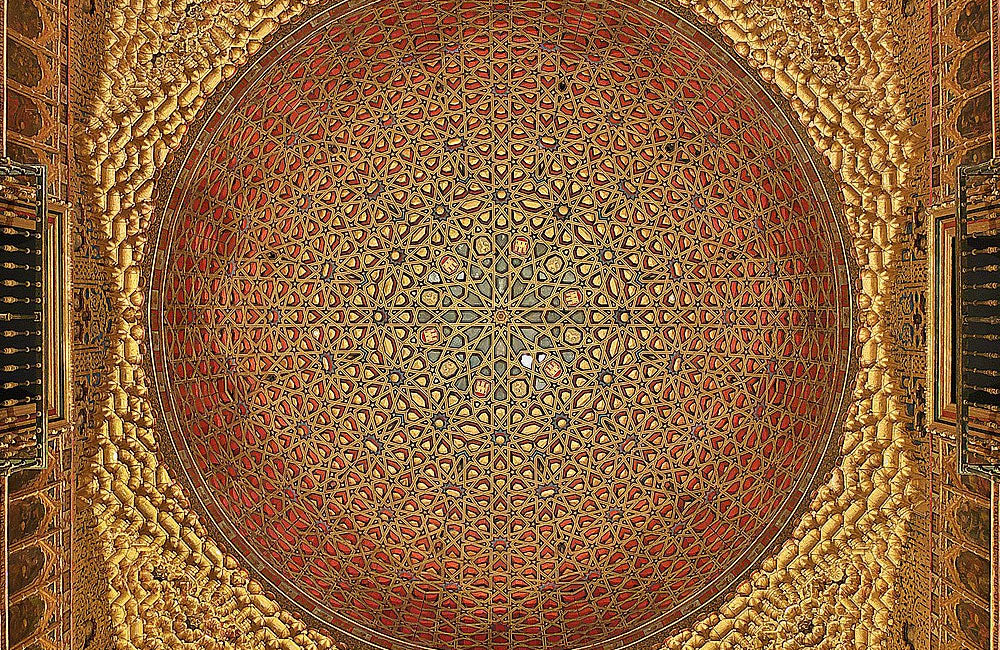
In the Nasrid palaces, geometry shapes everything: mosaics, arches, domes, and fountains. Every element is connected — mathematics, beauty, and spirituality forming one seamless whole.
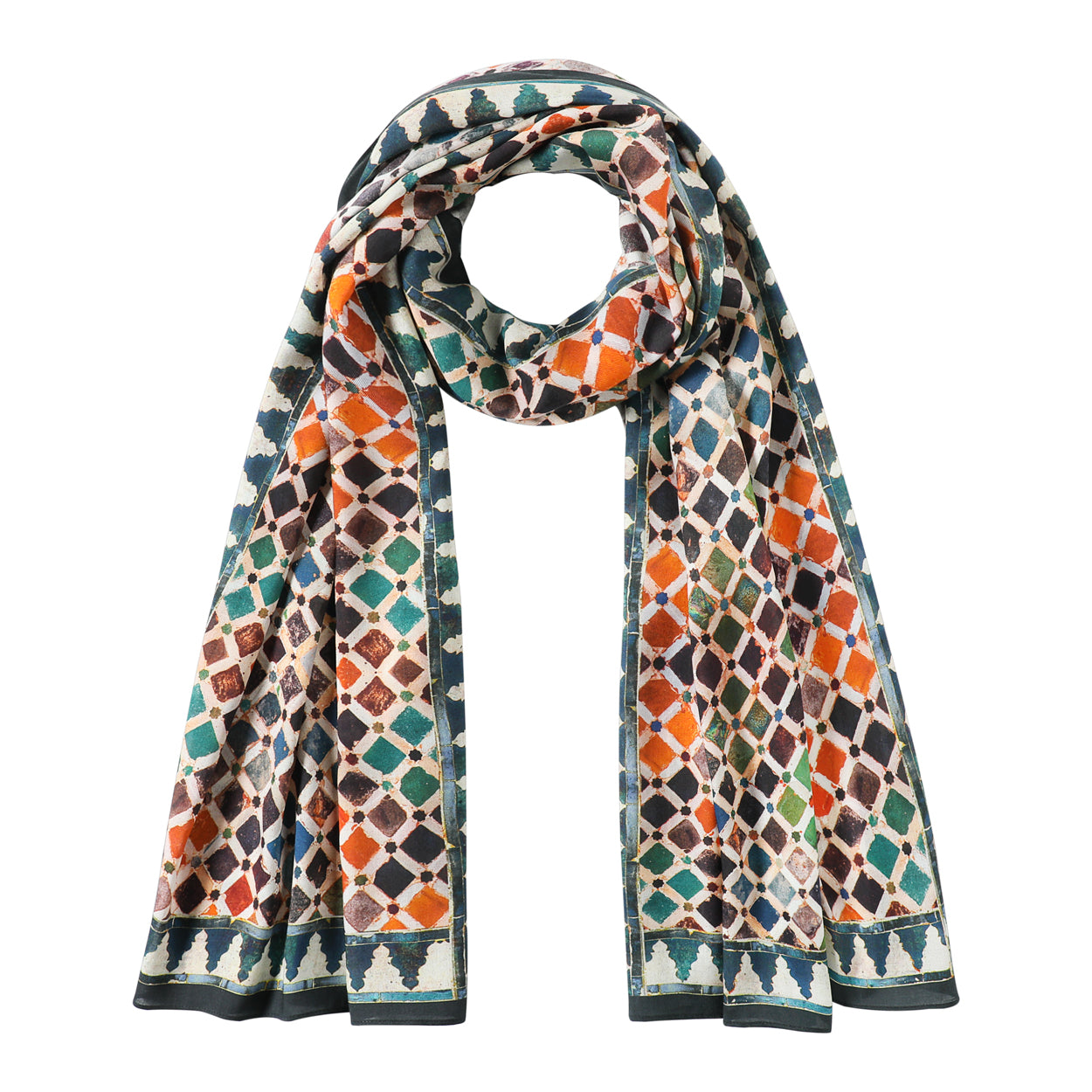
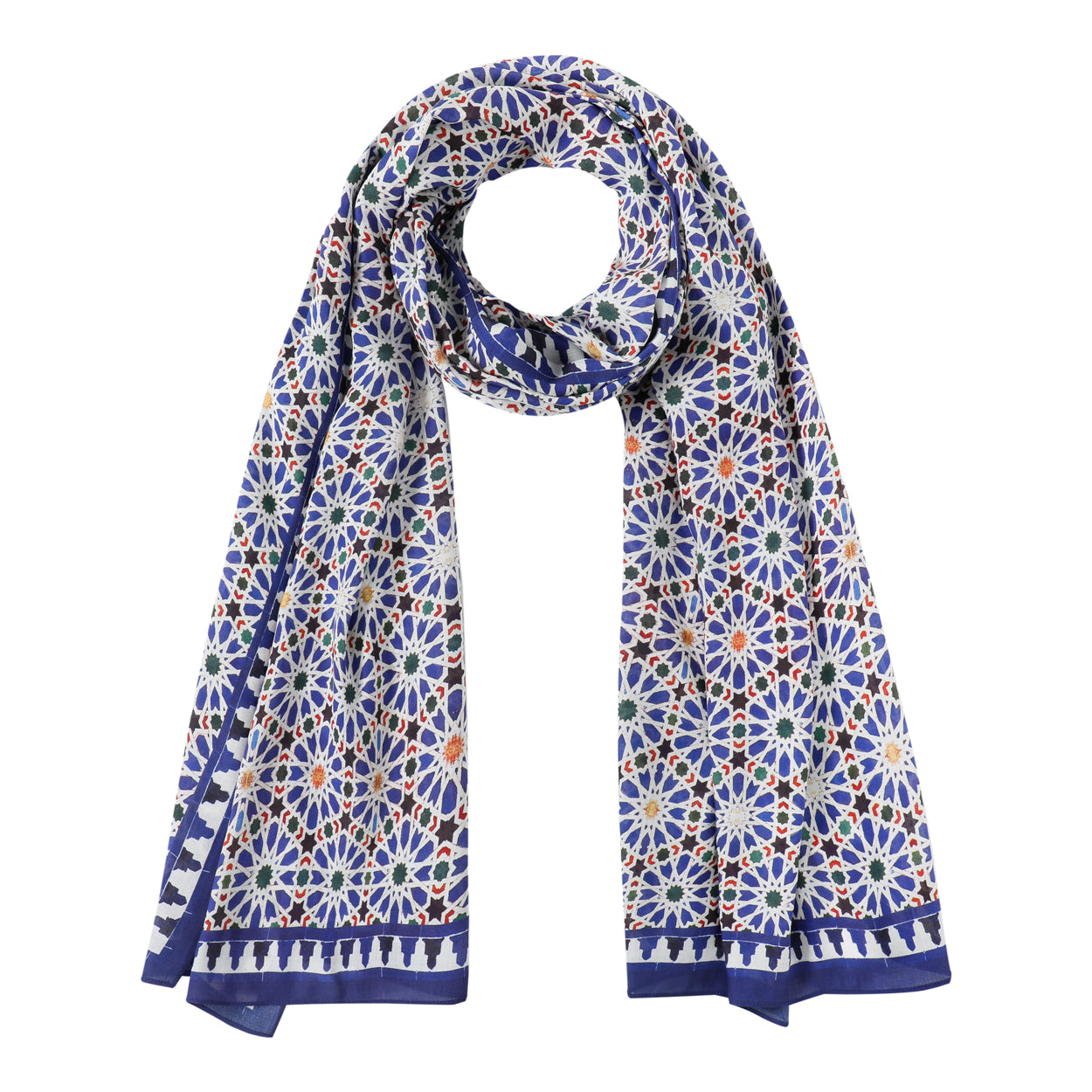
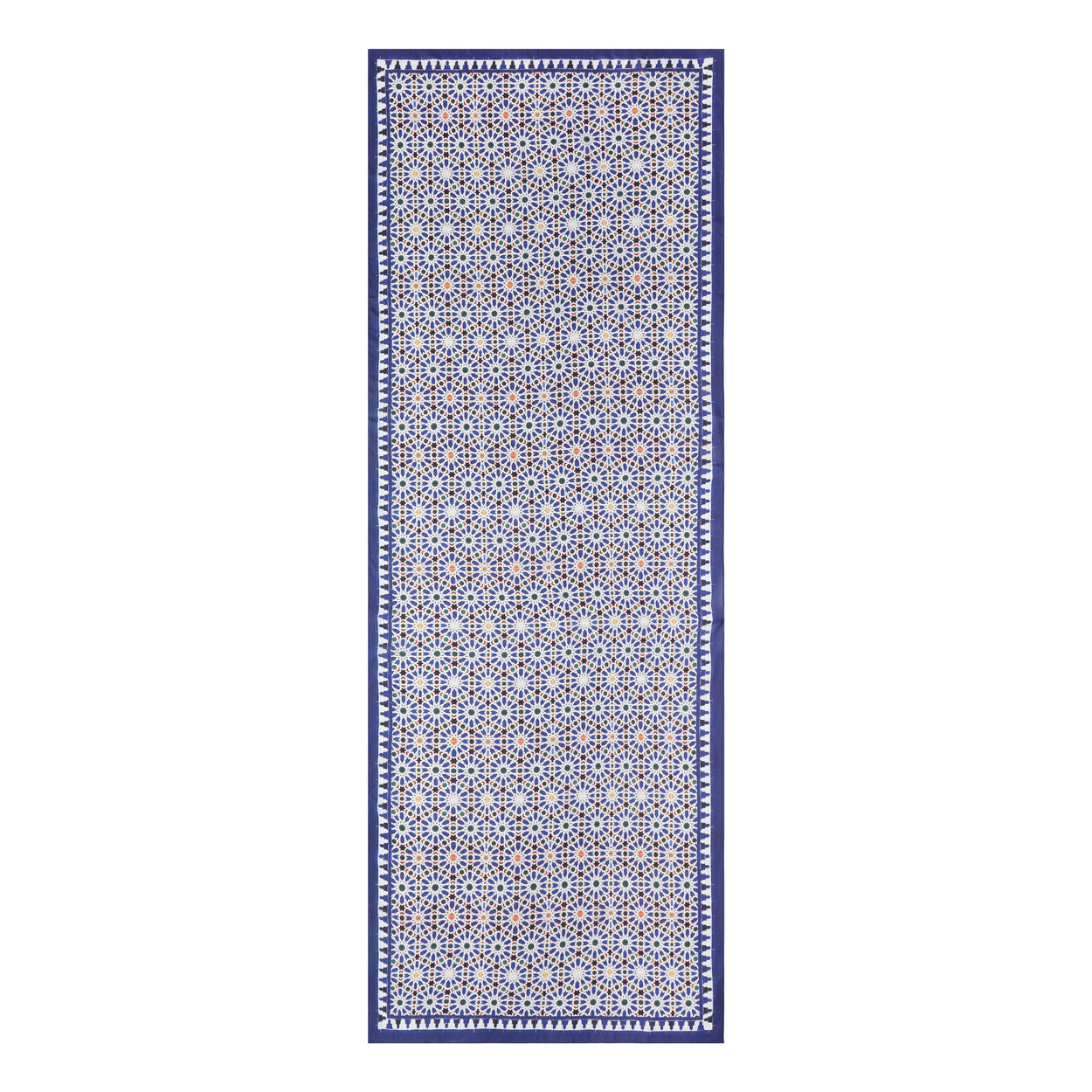
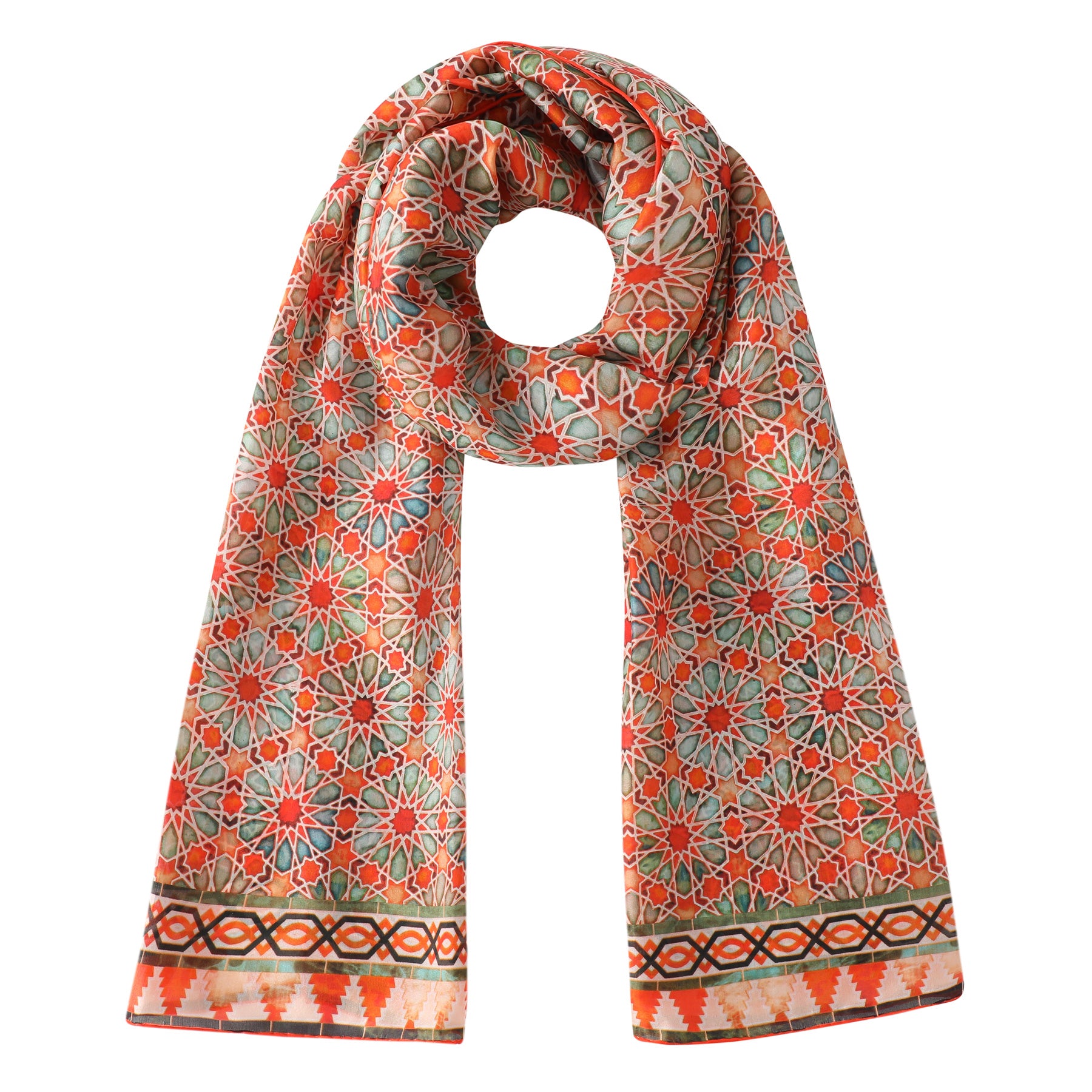
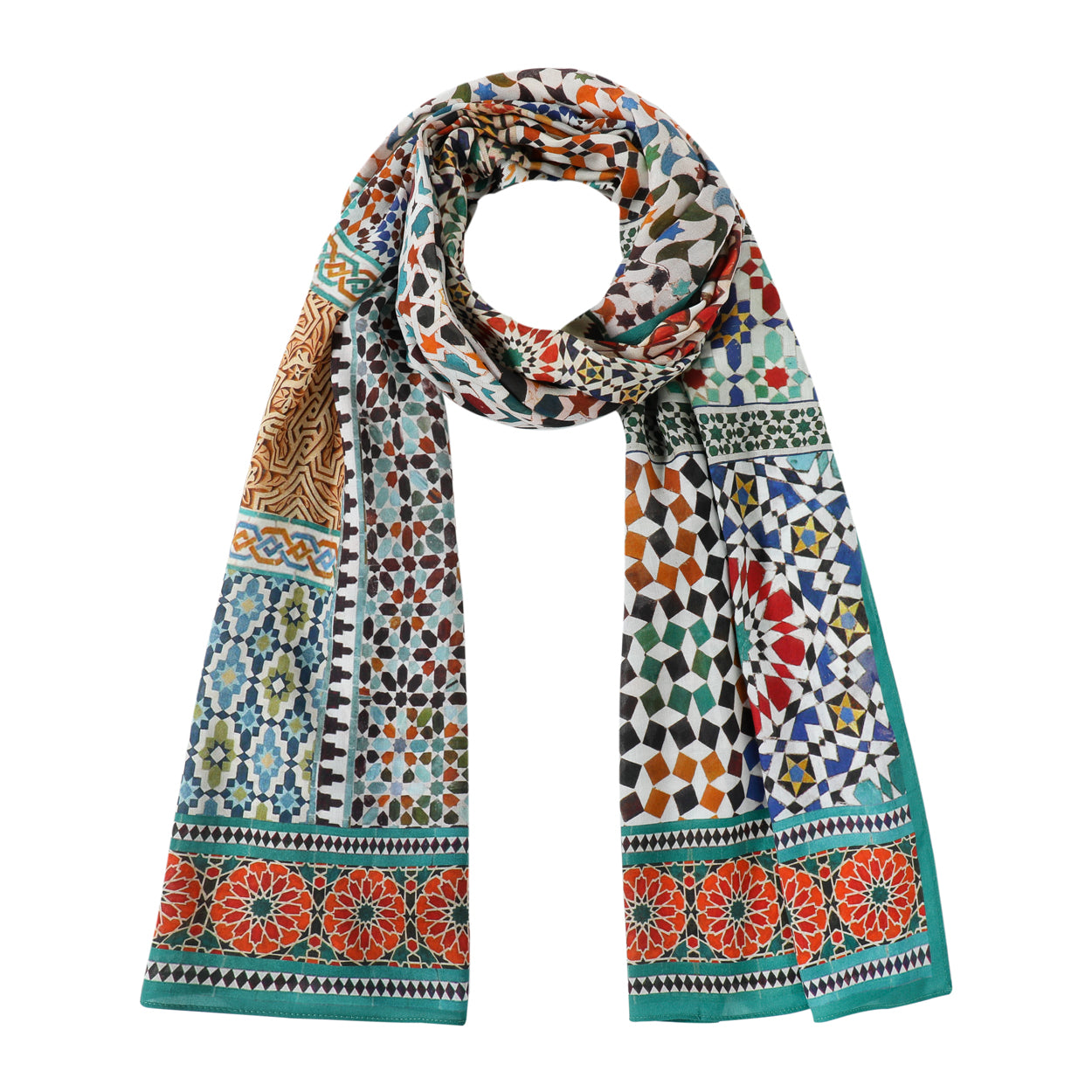
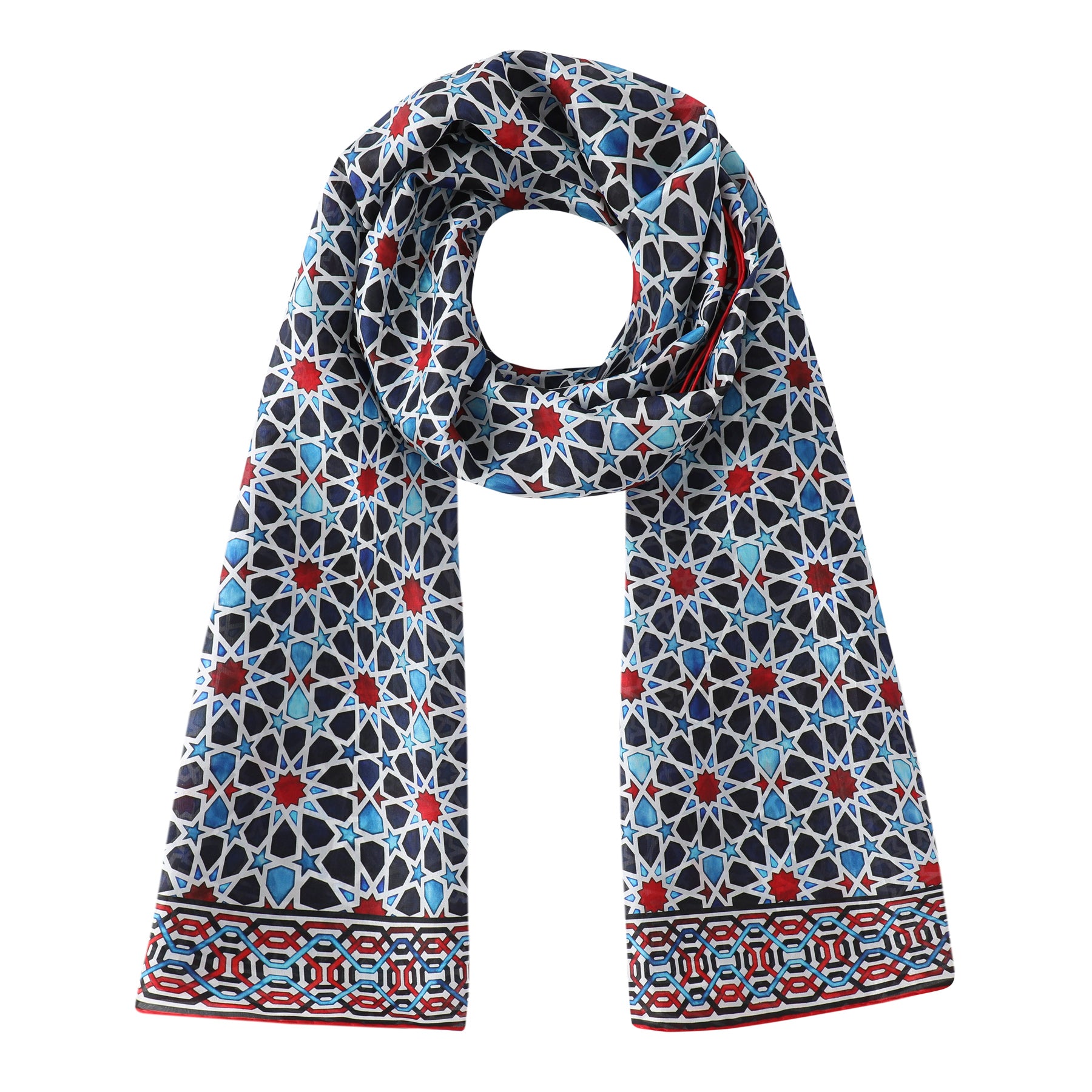
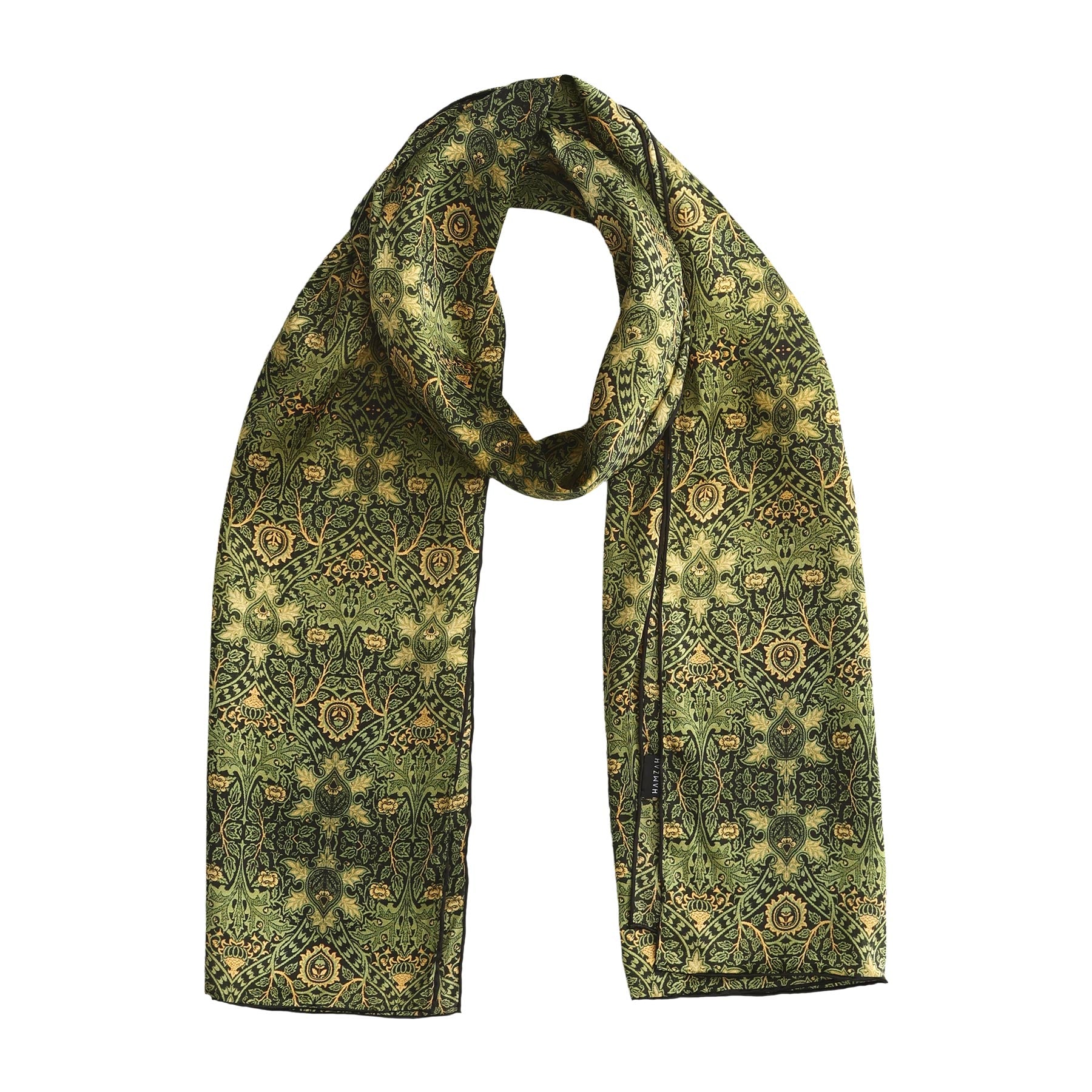
This harmony continues to inspire contemporary creators. At Munira, scarves and shawls pay tribute to these timeless mosaics, translating their patterns into natural silk designs.
4. The Spiritual Meaning of Islamic Geometry
Each mosaic is more than decoration — it’s a reflection of divine order. The patterns multiply outward from a single point, symbolizing the unity of Allah.
This fusion of precision and devotion made Islamic geometry one of the most profound artistic expressions in history.
Frequently Asked Questions
What is the Alhambra’s alicatado technique?
It’s a traditional method of cutting and assembling small colored ceramic tiles to form intricate geometric designs.
Why is geometry so central to Islamic art?
Because it expresses the harmony, order, and perfection of divine creation.
Where can the most famous Alhambra mosaics be found?
In the Palace of Comares, the Court of the Lions, and the Hall of the Abencerrajes.
Conclusion
Islamic geometry in the mosaics of the Alhambra is a dialogue between art and science. Within its walls, faith takes form, and form becomes eternal beauty. Every pattern invites contemplation of the infinite through the finite — a timeless reflection of the divine perfection that inspired the artists of Al-Andalus.











Leave a comment
This site is protected by hCaptcha and the hCaptcha Privacy Policy and Terms of Service apply.