


Hand Fan Language: History and Meaning
Introduction: What is the “hand fan language”?
The hand fan language refers to a set of gestures and positions performed with a fan to communicate discreet messages. It emerged as a form of etiquette and flirtation in salons and theatres between the 18th and 19th centuries, and today it fascinates us for its blend of elegance, mystery and history. In this clear, practical guide you’ll find its origins, the most cited meanings, tips to use it today without overdoing it, and keys to choosing and caring for your hand fans.
A brief history: from the salon to the myth
Fans arrived in Europe from Asia and took root in Spain, France and Italy. In the 19th century, when social conversation was strongly codified, the idea of a code of fan gestures spread—popularised in pamphlets and etiquette manuals.
Important: there was never a single, universal code; interpretations varied by time, city and social circle. What we now call the hand fan language is largely a compendium of those uses and of the literature that diffused them.
How to “read” the hand fan language (practical guide)
Below are the most referenced gestures in classic compilations. Use them as cultural references—not absolute rules—and adapt their meaning to context.
Basic gestures and their traditional meanings
-
Fan closed, held in the right hand: “No” or lack of interest.
-
Fan closed, held in the left hand: “Yes” or openness to talk.
-
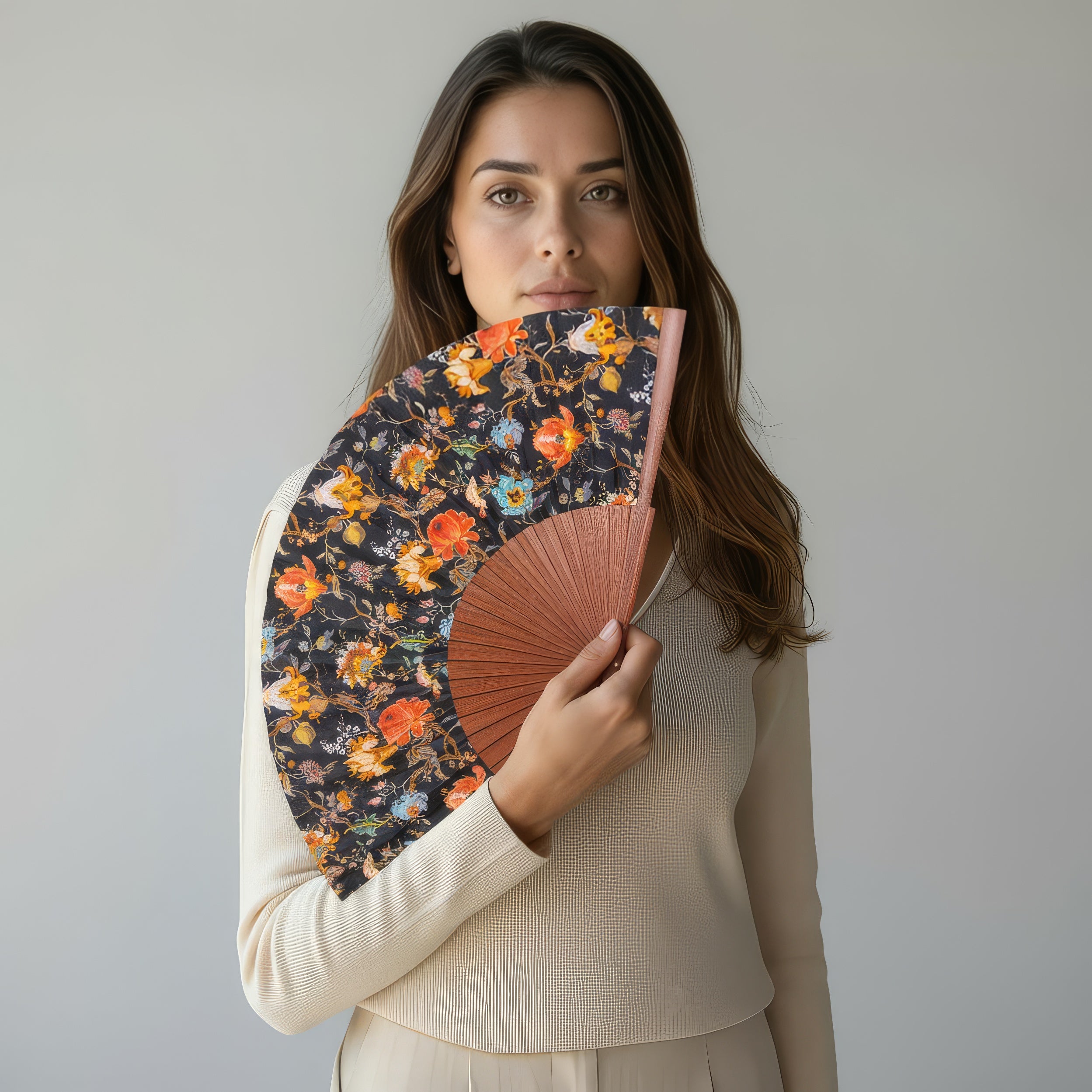
Partially covering the face: Discretion, confidence or flirtation.
-
Fanning slowly: Calm, comfort, composed interest.
-
Fanning quickly: Nervousness or impatience (“you kept me waiting”).
-
Tapping the palm lightly with the fan: Mild anger or reproach.
-
Resting the fan on the right cheek: “Yes” (affirmation).
-
Resting it on the left cheek: “No” (negation).
-
Letting the fan drop: “We’re at ease / trust me,” or in other lists, playful flirtation.
-
Opening and closing repeatedly: Impatience or wish to leave.
-
Looking over an open fan: Direct observation, confident interest.
-
Passing the fan from one hand to the other: “I’m watching you” or “I’m undecided.”
Note: you’ll see different versions of these signals in manuals and blogs; take it as part of the historical charm of the hand fan language.
Positions and handling in social settings
-
Open at chest height: Receptive attitude, open to conversation.
-
Closed next to the body: Reserve, personal boundary.
-
Half-open pointing towards someone: Focus of attention (cordiality).
Modern etiquette: how to use a fan today (without overacting)
A fan is, first of all, functional. Any gesture interpreted as a “signal” should feel natural. Some pointers:
Weddings and formal events
-
Use it to cool yourself discreetly; avoid fanning others without permission.
-
Match style (silk, lace, wood) to the dress code.
-
If you want to play with the hand fan language, keep gestures gentle and smile: tone is everything.
Fairs, theatre or cocktail parties
-
Keep steady, moderate fanning in enclosed spaces.
-
When talking, slow the motion and open the fan slightly: it signals openness without covering your face.
Conscious non-verbal communication
-
Decide 2–3 coherent gestures in advance (e.g., open fan = receptive; closed = pause).
-
Avoid complex choreography: less is more.
Meanings of colours, materials and styles (common associations)
There are no fixed “laws”, but there are frequent cultural associations that can guide your choice:
Colours
-
Black: sophistication, restraint; traditionally, mourning.
-
White / ivory: purity, light, summer, ceremonies.
-
Red: energy, passion; ideal for evening looks.
-
Blue: serenity, discreet elegance.
-
Gold / metallics: celebration, luxurious accent.
Materials and feel
-
Silk: fluid, soft sheen, quiet and refined motion.
-
Lace: romantic lightness.
-
Natural wood: tactile warmth, tradition; Bocapi or pearwood offer stability.
-
Quality paper: good airflow and artistic finishes.
Quick buying guide: choosing the perfect fan
-
Main use: formal event, city summer, dance, collection?
-
Size: large fans move more air; medium balance comfort and presence.
-
Weight and balance: test the spin and opening; it should feel agile.
-
Sound: silk and lace tend to be quieter; some wooden frames make an elegant “click” when closing.
-
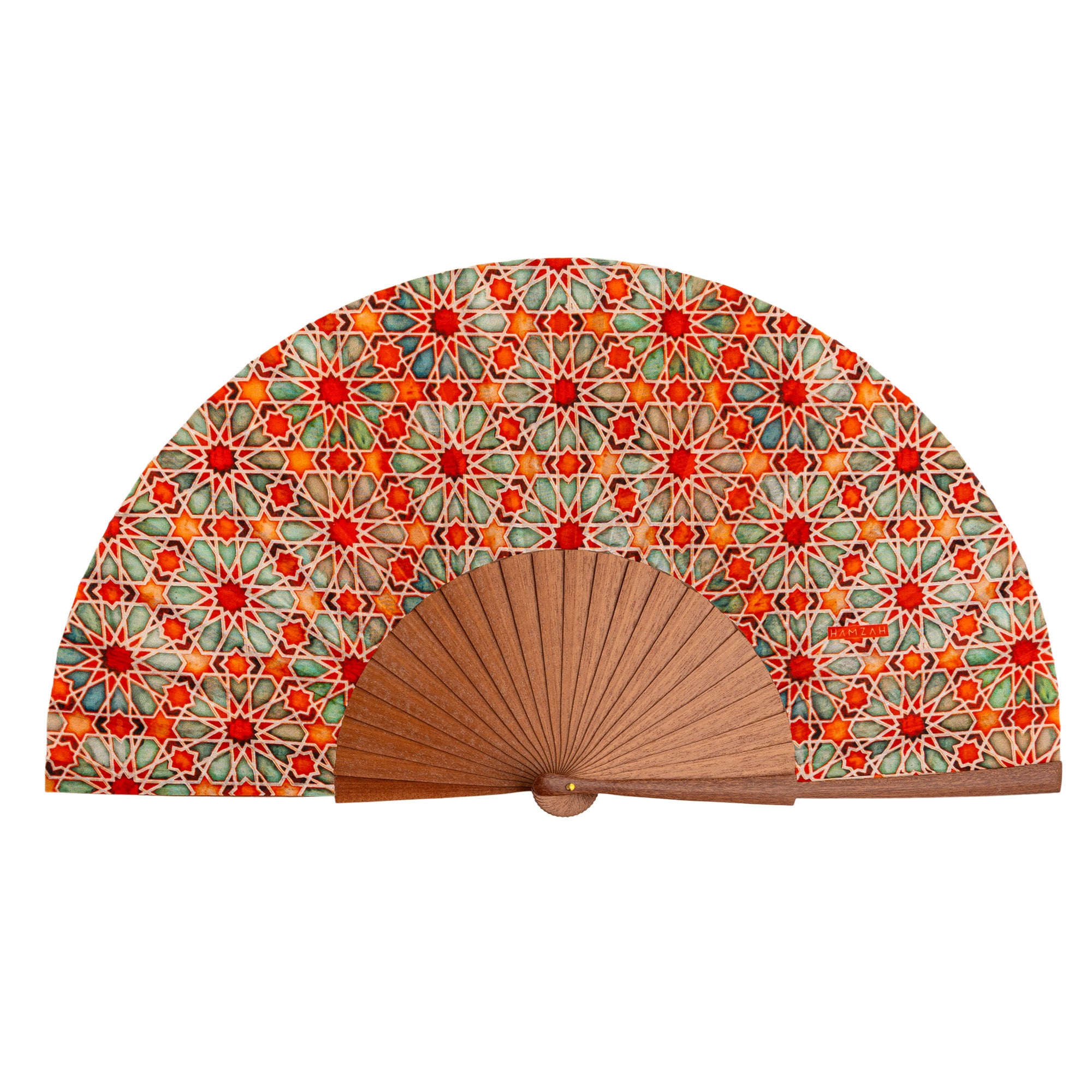
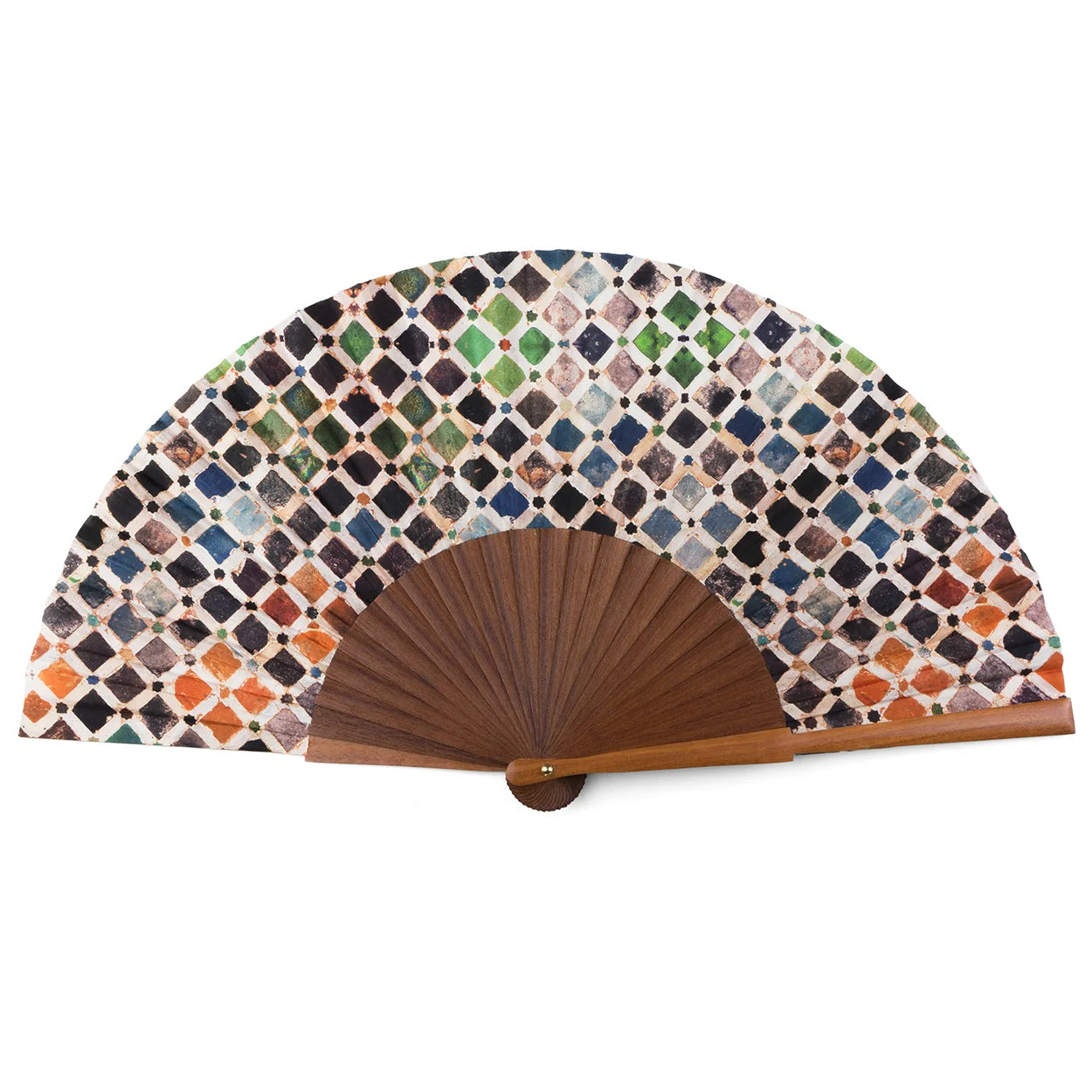
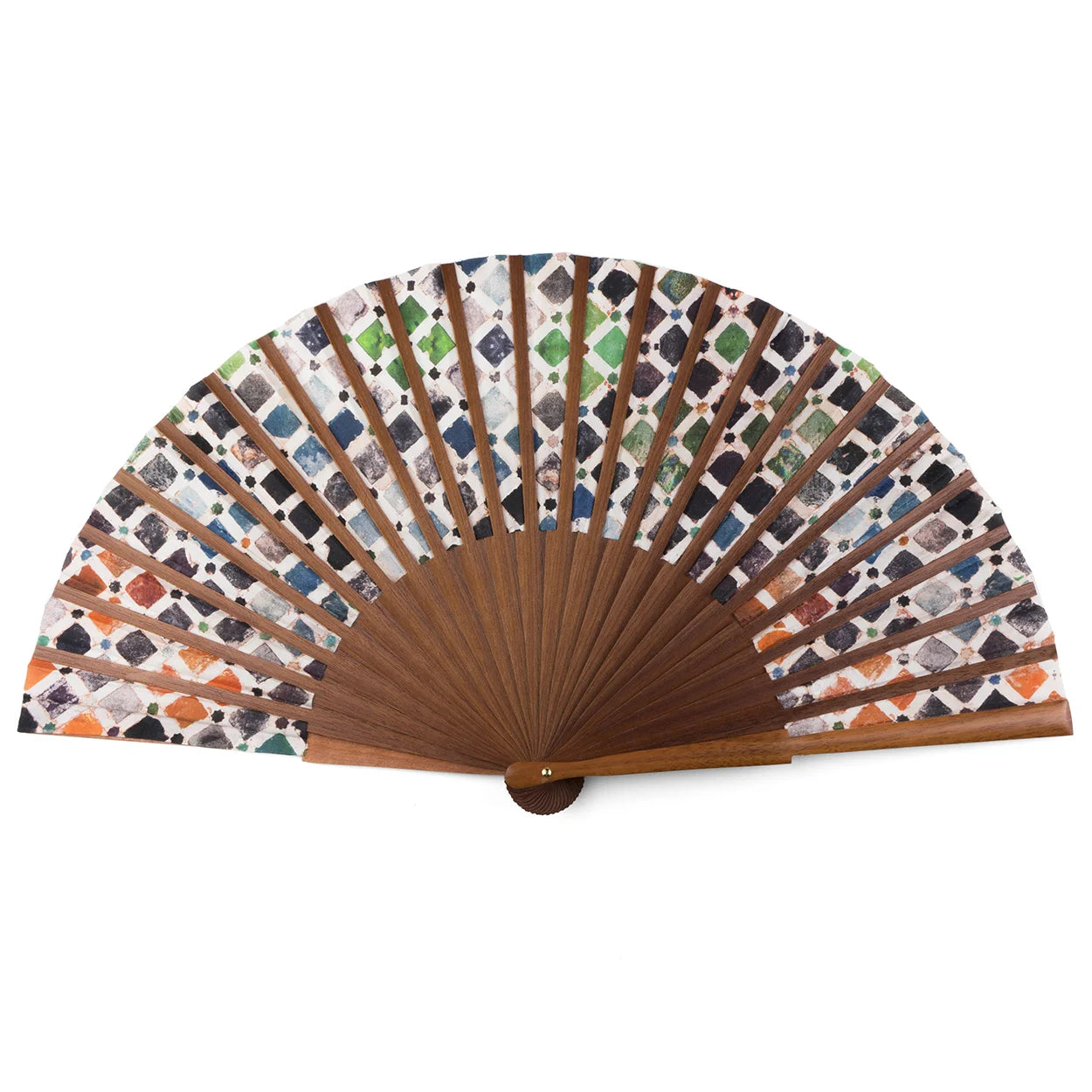
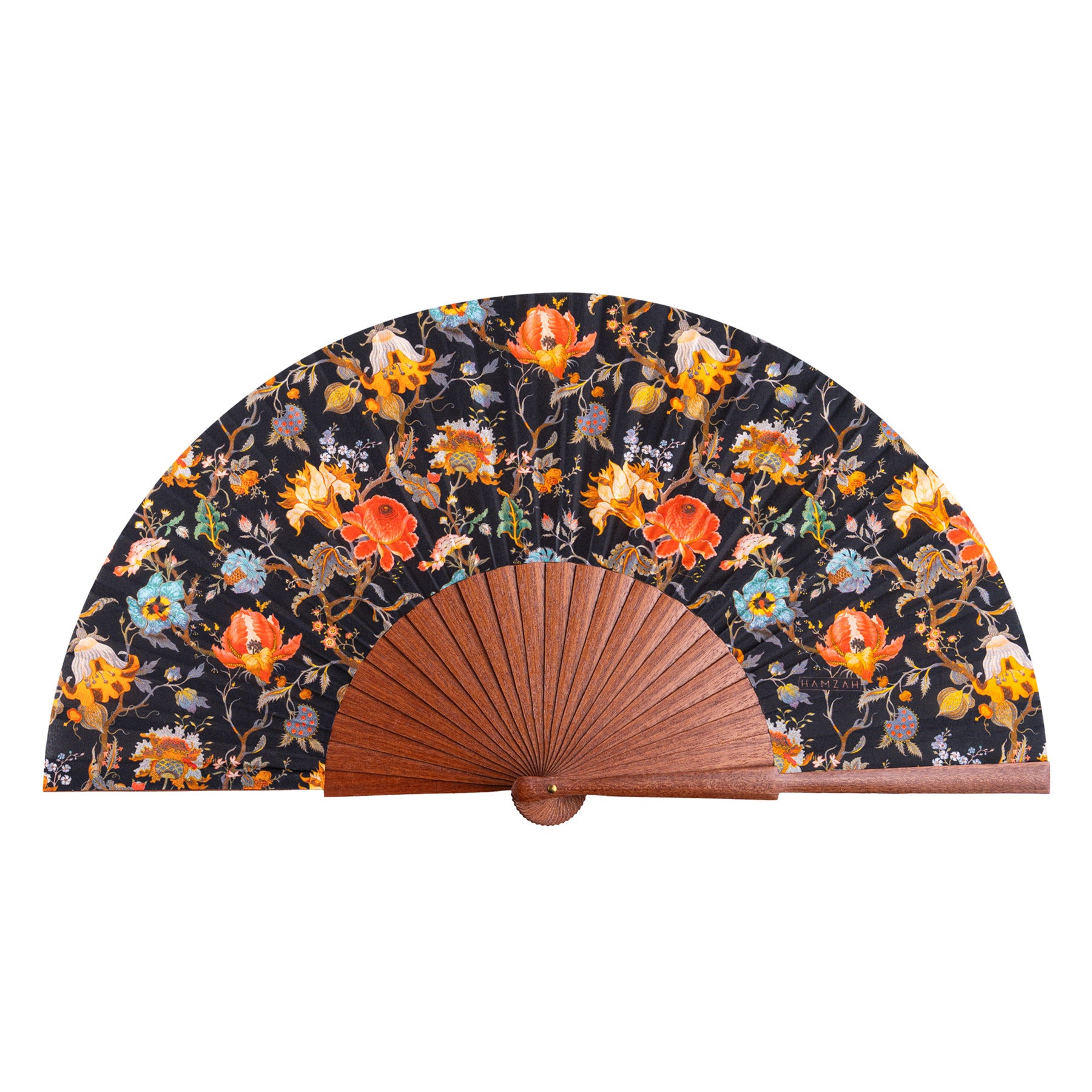
Design: geometric, floral or cultural motifs add identity to your look.
Care and maintenance: let it “speak” for years
-
Open/close gently, without twisting the ribs.
-
Store in a fabric sleeve, away from heat and humidity.
-
Clean silk or lace with a soft brush and avoid water; for difficult stains, seek a professional.
-
Avoid direct perfume: it can stain or alter colours.
-
Transport: keep it upright and protected inside your bag.
Myths and realities of the hand fan language
-
Myth: there is a single, foolproof dictionary of gestures.
Reality: there were local variations; what lasts is a shared imaginary. -
Myth: any gesture conveys one fixed meaning.
Reality: context and attitude matter more than an isolated move. -
Myth: using a fan forces you to follow old codes.
Reality: today the fan is a functional, aesthetic piece; you can draw on tradition without rigidity.
How to integrate the hand fan language into your personal style
-
Choose a minimal vocabulary: one “open”, one “pause” and one “close” gesture.
-
Practise in front of a mirror with your chosen fan (each material suggests a different rhythm).
-
Adapt to the setting: salon, street, ceremony—vary amplitude and speed.
-
Match your look: colour and texture should converse with your outfit.
-
Keep it natural: if a gesture gets in the way of conversation, tone it down.
FAQs about the hand fan language
Was it really used for flirting?
Yes—within some circles it served for discreet flirtation. But it wasn’t a “universal secret code”: it belonged to a broader social game.
Can I memorise it?
You can memorise a few popular signals, but focus on expression and context to keep it elegant and current.
What’s the best fan for beginners?
A medium-sized, light and quiet one (for instance, silk on well-finished wood). It lets you practise without fatigue.
Is excessive fanning considered rude?
In enclosed or very formal spaces, a slow, discreet motion is best.
Conclusion: a tradition that still communicates
The hand fan language distils centuries of sociability, fashion and ritual. Today you can draw on its gestures to add charisma to your presence while remembering its true essence: to cool, to adorn and to accompany. Choose a fan that speaks for you, care for it, and let your natural ease tell the story.










Leave a comment
This site is protected by hCaptcha and the hCaptcha Privacy Policy and Terms of Service apply.